
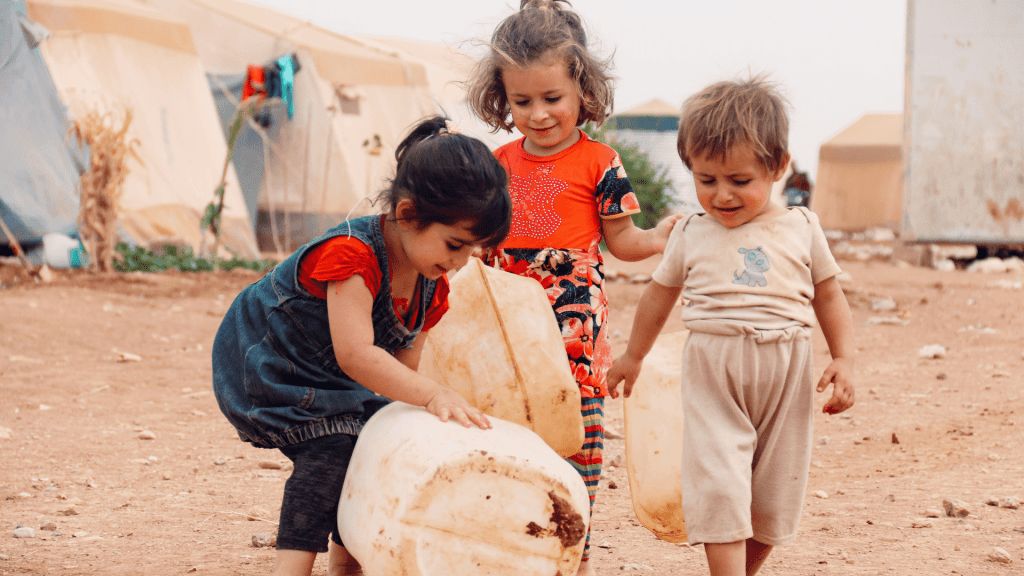
Meeting urgent needs with clarity, strategy, and impact
Children in war zones face a distinct set of risks—malnutrition, disease, injury, trauma, and exploitation. While humanitarian needs are vast, donors can make a real difference by focusing on the core essentials that protect life, restore stability, and support long-term recovery.
Nutrition: Preventing Hunger and Developmental Harm
In conflicts like those in Gaza and Sudan, food insecurity escalates rapidly. Markets collapse, aid is delayed, and children—especially under five—are most at risk.
High-impact support includes:
- Ready-to-use therapeutic foods (RUTF) to treat severe malnutrition
- Infant formula for displaced or orphaned babies
- Micronutrient powders to prevent stunting and anemia
Funding organizations with targeted nutrition programs is the most effective approach—physical food donations are rarely practical unless part of coordinated logistics.
Water and Hygiene: Reducing Disease in Crowded Conditions
Clean water is often inaccessible in war-affected areas. Outbreaks of cholera, hepatitis, and diarrhea are common in shelters and camps.
Essential interventions include:
- Water purification tablets or filters
- Soap, diapers, and menstrual hygiene kits
- Mobile handwashing and toilet units
Support to WASH (water, sanitation, hygiene) programs ensures basic health and preserves dignity—especially for girls and infants.
Medical Care: Filling Gaps in Health Access
Hospitals in conflict zones are often overwhelmed or destroyed. Children with injuries, burns, or chronic illnesses may go untreated.
Priority needs include:
- Antibiotics, wound care, and burn kits
- Medicines for asthma, epilepsy, and infections
- Support for mobile clinics and emergency transport
Donors should look for efforts that prioritize local procurement and rapid distribution over bulk shipments from abroad.
Education and Emotional Support: Restoring Normalcy
Even in war, learning and play are vital. Education offers structure and psychological protection.
What helps most:
- School-in-a-box kits, radios, or tablets with offline lessons
- Play therapy tools: art supplies, books, storytelling kits
- Trauma-informed teacher training and safe learning spaces
Support to education-in-emergencies programs keeps children engaged and mentally anchored.
Protection: Preventing Exploitation and Loss
Displacement increases risks of abuse, trafficking, and family separation.
Key supports include:
- Gender-sensitive shelters and child-safe zones
- Family tracing services and legal aid for unaccompanied minors
- Culturally trained social workers and protection officers
These are often best delivered through partnerships with local organizations and diaspora networks
Closing Thought
The most effective support is focused, informed, and responsive to real conditions on the ground. Thoughtful giving isn’t just generous—it’s strategic. For children in crisis, it can mean the difference between surviving war—and having a future beyond it.